Sunday, 21 October 2012

Demention is SIX months old! Time for a giveaway

by Teri Terry


To celebrate half a year of Demention.... TA DA!! Yes: we have our very own bookmarks. Huge thanks to Demention's own Julienne Durber for designing their total gorgeousness.
On one side, the Demention banner may look a little familiar; on the other side, it is the Demention team - and our books, website and Twitter details. Claire Merle's second cover is hidden from view just now as it hasn't been revealed quite yet, but it is on the actual bookmarks.

What do you think? 
To celebrate our six months, and our new bookmarks, it is time for a GIVEAWAY.
This competition is now closed, but please read on!

In addition to the bookmarks, I've got some books to give away also: these are titles by the writers with whom I did events at the Edinburgh Book Festival a few months ago. Who knew that their publishers were going to send me a copy of them so I could read them before the event? I didn't, and by the time they came in the post I'd already bought my own copies. So here are the spares: Dark Parties by Sara Grant, The Other Life by Susanne Winnacker, and Dead Time by Anne Cassidy: and as this is a celebration, I'll throw in a signed copy of Slated, too!


This grand prize will include a Demention bookmark, AND a very cool bleeding butterfly sticker from Suzanne Winnacker! I'll really sorry but due to the cost of postage, the grand prize is UK only. But there will also be another three Demention bookmark prizes that are open internationally! Details on how to enter are below with the Rafflecopter.


What have we been up to over six months of Demention?

Julie, Julienne and I introduced ourselves in the very first post; then Claire introduced herself a bit later when she joined Demention.

There have been discussions and debates:
If only all the adults were dead
Can a book change the world?
Dystopian fiction: Science fiction for girls?
Science Fiction: dystopia for boys?
The popularity of dystopian fiction
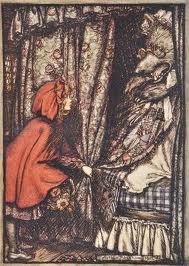
The darkness of fairytales 
Hunger Games boy & girl appeal

Reviews:
Jeff Norton's Metawars

Interviews:
Sara Grant, author of Dark Parties
Keith Gray, author,and editor of Next
Janet Edwards, author of Earth Girl
Claire Merle, author of The Glimpse - before she joined Demention!
AG Howard, author of Splintered
Sam Hawksmoor, author of The Repossession and The Hunting

Guest posts, too:
MG Harris on her fave post-apocalyptic novel
Kate Atherton on time travel

On writing and writers:
Who do you write for?
Breaking the rules
Going for gold

Even news on getting an agent, a pre-launch Q&A, book launch, and a mass slating of book bloggers!


Now on to the giveaway:
This competition is now closed. First prize of books and swag goes to CB Soulsby; runners up to receive a Demention bookmark each are Ashley E., Jax B and Rose H! congratulations. If you haven't already given details, please use the contact form on this website to give your details so we can post your prize

To enter use the Rafflecopter, below: you get entries by leaving a comment on this blog post - on our bookmarks, or what you think of Demention - by following the blog, by tweeting the giveaway (available daily), and by following the Demention team on Twitter. The giveaway is over on 19th of November. 

Thanks very much for entering, and good luck!
a Rafflecopter giveaway

Monday, 15 October 2012

If you could turn back time, if you could find a way...


Today on Demention we are delighted to host guest blogger Kate Atherton, who book blogs on the fabulous For Winter Nights about YA, sci-fi, thrillers and historical fiction. She also has a film blog Movie Brit and you can follow her on Twitter @Wetdarkandwild. 

With the release of blockbusting time travel movie LOOPER, Kate takes a trip through the fascinating paradoxes of TIME TRAVEL and asks - if we could, should we? 
And what would YOU do, if you could...? 

Is it best not to mess with time?

Time will tell...

As certain as day follows night follows day, time marches on and waits for no man or woman – although, strangely, as the years go by it does seem to speed up. But, while most of us have yet to work out how to rein it in, short of investing in expensive cosmetic products, novelists and film makers appear to have discovered the secret to turning back time, taking us (if we have a mind to believe) back in time and even into the future. It seems that time travel does exist after all. 

Of course, there are rules to be obeyed. A transient knowledge of Star Trek moral codes will warn us that if we upset the space time continuum there will be dire consequences. All right it may save humpback whales and release Voyager from an icy tomb but if you mess around with time you may end of up never having been born at all.

Looper is the latest presentation of movie time travel and it sums up confusingly the perplexing paradoxes of moving through time. By killing one's future self in the past and then killing one's past self in the future, how can there even be a movie in the first place?

H.G. Wells has much to answer for. While I'm not completely up to date with time travel in Classical and medieval texts, it's quite likely that The Time Machine was one of the first depictions of such a vehicle or machine in literature. However, considering that it led to an unpleasant encounter with  the Morlocks, the ultimately evolved working man, it's surprising that there were any more. Nevertheless, many years on, Jeremy Irons dusted off the machine only to find himself back in the future in the same place. You'd have thought he would have read up on it first.

Interestingly, Felix Palma re-examines the evidence of the H.G. Wells time machine in The Map of Time – travel through the Fourth Dimension might not be all that it cracks up to be. Although, if you lived in a London predated upon by Jack the Ripper, or you happen to be the Elephant Man, you can understand the appeal. In the latest novel, The Map of the Sky, Palma takes a closer look at H.G. Wells' reports of the invasion by Martians, another event that may lay in store for us for which we should prepare.

My favourite series of children's books focuses upon time travel – Alex Scarrow's TimeRiders. In each of the books the intrepid teen heroes, each rescued out of time, travel back to a different period of time (Jurassic, Roman, Norman, American Civil War and Victorian times) to right the wrongs that have been made in the past by the future. But what if the future has become so terrible that this seems the only solution? Is it right to prevent the changes, even if it does mean that we end up evolving into a race of technologically-advanced lizards?

Which begs the question - what would you do if you could go back in time? 
Is there a dictator you would like to kill or, as in the latest sixth TimeRiders novel, a human monster that needs to be stopped? But as City of Shadows showed, going back in time to kill Jack the Ripper might have seemed a good idea at the time, but its butterfly effect may have catastrophic consequences.

In Source Code, the secret sinister military have discovered a way to send an agent back into the last few hours of time, again and again. While this may have its uses – as here by solving a terrorist attack on a train and saving countless times – it's not necessarily good for the person who has to do the time changing, especially if it means having to be killed first.

Sometimes, though, travelling back in time can remind us of how good we have it now, even if the past is populated by the great artists and writers who lived in Paris in the 1930s. In Midnight in Paris, Woody Allen uses time travel as a form of therapy for a neurotic novelist and an even more loopy muse. The present does have its charms especially, according to Mr Allen, in Paris in the rain. Personally speaking, Paris in the sunshine has a lot more going for it.

It is a fact of time travel that the past does not like to be changed. You only have to watch Twelve  Monkeys to see the truth of that. And then there's Final Destination – five movies (at least) have now demonstrated convincingly that the future does not like to me messed with either. It would seem that the only potential way to alter the future is to reasses and redress the present.

What do you think? 
What's your favourite time travel story? 
What questions and paradoxes fascinate and perplex you?


Monday, 8 October 2012

Not a review of the Hunger Games by Julienne Durber


As the title suggests, this is not a review of the Hunger Games. There are plenty of those about for both the book and the film.  What I'm going to do is look at why I think that the Hunger Games is the first book I've read for Demention that appeals equally to both girls and boys.


But before I start – a warning. This post is packed with spoilers. The Hunger Games is a cracking adventure story full of twists and surprises (careful - that was very nearly a review!) If you haven't read the book or at least seen the film, don't read on. It will spoil it!

I had resisted reading the Hunger Games purely because it was so popular (yes, I am one of those people) but as an aspiring writer of dystopian fiction it was inevitable that I would eventually succumb. So, packing my cynicism away and screwing on my impartial reviewing head, I opened my copy and began.

As this isn't a review, I won't start analysing the plot structure or the initial character development, but I will focus on character. It is a much talked about and usually accurate view in the publishing industry that girls will happily read books where the hero is a boy, but boys are far less likely to read about the adventures of girls (uur! Girlz … bleh! etc.).

This puts writers in an odd position – writing from the heart you might want to tell the story of your heroine, but logically this will reduce your potential audience. So what to do?

What Suzanne Collins does so well in the Hunger Games is to keep Katniss, her heroine, almost entirely neutral. Though there is a romantic thread running throughout the book it only surfaces occasionally, just sticking its head up to remind you that it's there.  Katniss is uncomfortable with her feelings towards both Peeta and Gale, and there is the brilliant device of Hamich's plan to set the couple up as being in love as an excuse for her not to believe that Peeta's feelings are real.

Now from one point of view, Katniss' reluctance to deal with romantic feelings is a sign of vulnerability that readers can identify with, seeing their own timidity in the face of love reflected.  But equally (and the equality is the key) her reluctance can be read as an extremely practical suppressing of feelings in the face of, at the beginning of the book a need to feed her family, and later a need to stay alive!  This interpretation is left entirely up to the reader.
Controversial Opinion destined to offend anyone who is a big fans of the Hunger Games – if Katniss were a boy and Peeta a girl, the fundamental story would remain unchanged!

Don't get me wrong, I think it would diminish the characters immensely. Both Katniss and Peeta would become far more standard, almost stereotypical characters - the emotionally closed off boy, good at hunting, and the girl who is secretly in love with him.

This shows the strength of the gender neutrality of the characters.  The 14 year old boy in me enjoyed the actual games the best, and it didn't matter that Katniss was a girl because she was cool.  Despite her internal doubts, she showed resilience and hero-skills in every set piece encounter most of which wouldn't have seemed out of place in any number of action films.

With every trap, stratagem and reflex decision Katniss made, I found myself reminded of Predator, Rambo (the first one), the Bourne films, James Bond, Mission Impossible, Die Hard – the list goes on.  I'm not holding these up as great films, but from a heart-thumping, popcorn-munching point of view, they are hard to beat.  A central character faced by overwhelming odds having to rely on limited resources and his (her?) initiative and resourcefulness.

And from a more literary side, try Aragorn and Legolas in the Lord of the Rings, Bilbo in the Hobbit, Harry Potter, Charlie Higson's young incarnation of Bond, even a random adventure book I bought in a charity shop (purely for the absurd title) Bloody Passage by Jack Higgins – packed with cliches, two-dimensional characters and predictability, but a thoroughly enjoyable intellect-free indulgence.

But even these set pieces were handled in a neutral way.  Katniss never rejoiced in her kills, never showed satisfaction or even relief in the deaths of others.  I think it would have been as easy for me to empathise with her as a character struggling to retain her own identity and integrity whilst using her hunting skills to stay alive, if it weren't for the excitement of my inner child.

So, is Katniss an action heroine, her decisions uncluttered by emotion, doing what she has to in order to survive and help her those around her despite her inner feelings – understanding that the world is a harsh place and a girl has to do what a girl has to do?

Or

Is she a girl who has had to come to terms with great emotional loss and responsibility far beyond her years, has picked up some useful skills, and is on the cusp of adulthood – a scary swirl of emotions at the best of times?

In my opinion, Collins has walked the fine line between the two superbly, committing to neither one nor the other.  But given how the first book finished (I didn't want to start the second until I'd written this post) I suspect she will be stepping off the line in the second.

To all of you screaming at your screen that I'm just bringing too much fighty-boy baggage and that Katniss is, deep down, a sweet, sensitive soul I have three things to say:

1 – The final berry-related 'screw you' to the Capitol was classic loose cannon, maverick action hero behaviour – and I loved it!

2 – If Katniss was so unsure of her own emotions towards Peeta and Gale, and so unsure about Peeta's real feelings, how could she have functioned so well and for so long selling her contraband at the Hob and to the officials of District 12 without getting constantly ripped off?

3 – Tell me what you think.  Argue.  Agree.  Insult.  Feed back.  This is my opinion and I'd love to hear yours.

And as I like to end on a giveaway, I'll send a Demention bookmark to the first person to draw a convincing parallel between the final showdown in the arena and an early scene in a well-known action film featuring Keanu Reeves and a bus.

All generic royalty free images provided by freedigitalphotos.net and manipulated by Julienne

Monday, 1 October 2012

Julienne's Big Announcement - I have an Agent!


My first ever Demention post featured the launch of our own Teri Terry's Slated in the style of a dark dystopian narrative.

It seemed only appropriate to blog about the events of the last week in the same style.

(To read the original post click here)

Monday - 07:32

My cover was prepared - for many months I had been deep within the Organisation posing as a lowly design operative, an excellent position from which to feed information back to my Aspiring and Elevated brethren and sistren.  No one at the Organisation had suspected a thing, but this week, this week of change, my cover was in danger of being blown.

Within the ranks of the String Mistresses and Word Slashers, rumours were flowing, vines heavy with botrytis-rotted grapes were quivering.  Too many people knew change was upon us, but too few knew what form this change would take.  Speculation was rife and even I had myself been interrogated within the ranks of the Aspiring, but my nerve had held ... just.

Tuesday - 11:47

A secret coded communique arrived!  Risking my cover, I broke the seal within the very offices of the Organisation.  Rejoice - Cogs were moving!  A reorganisation within the ranks of the String Mistresses meant that an opportunity had arisen for more of the Aspiring to become Elevated, and I had been chosen to be one of the first!

But the information was to be guarded for another 48 hours.  Torture!  I spent the rest of the day haunted, jumping at every noise, suspecting each shadow.  One stray word and the Enforcers could descend on me!

Wednesday - 10.14


The call went out mid morning.  The illicit airwaves and underground grapevine crackled with the news - one of our finest new String Mistresses and a deft Slasher of Words - Gemma Cooper - had been recruited by that most flexible of groups, The Bent Agency.  She would be joining Mistress of Strings Molly Ker Hawn in representing Bent's underground activity in the UK.

Risking breaking their own cover, Aspiring and Elevated, String Mistresses and Word Slashers jammed the airwaves with congratulations for Gemma.

Thursday - 09:07

Confirmation arrived!  I was free to announce my own news.  Picking a moment when the Enforcers were distracted and only one distracted guard was slouching through the office, I sent the missive I'd spent a sleepless night preparing and encoding:

- Friends - Gemma Cooper has agreed to turn her string pulling and word slashing skills to my advantage - My journey towards Elevation has taken another step - Fight the Organisation! - 


Friday - 15:00

What seems like a continuous flow of messages of joy from both Elevated and Aspiring have reached me.  To risk blowing their cover to offer such support gives me hope that, with the help of the String Mistresses and Word Slashers, we can overcome the Organisation's Enforcers and triumph.


But for now, brethren and sistren, let us sink below the parapet until another victory necessitates our uprising again.

All generic royalty free images provided by freedigitalphotos.net and manipulated by Julienne

Wednesday, 26 September 2012

"Real life isn't always pretty, so why should fairy tales be?"


The Brothers Grimm provided the first collection of fairy tales when they travelled around Germany studying linguistics. As part of their study they collected up the local folk tales told by elders in these regions and wrote them down. Most of these tales tended to be gruesome and violent, with strong sexual undertones and often included dark themes. To make them more acceptable to society and in conform with some of society’s morals the brothers made some alterations to the stories before publishing them as the Brothers Grimm Fairy Tales –  in fact, between 1812 and 1857 their first collection was revised and published many times, and grew from 86 stories to more than 200. But even the Brothers Grimm Fairy Tales were rather different to the more familiar versions read to children today. For example, in Grimms Cinderella, her father was alive during the story, her step-sisters cut off parts of their feet to fit the glass shoe and they were eventually punished by having their eyes pecked out and the eyeballs given to Cinderella as a wedding present.(For more info go here or here!) 

Since the publication of the Brothers Grimm Fairy Tales adaptations have abounded, and as fairy tales became a staple for the nursery the stories were often simplified, the violence watered-down, the good rewarded and the bad punished (through consequences of their own actions.) With the most famous adaptations by Walt Disney, fairy tales became equated to happy endings and a somewhat innoncent, wholesome outlook. Now, with young adult novels becoming more and more popular it seems to me quite natural that these original stories are returning to their darker roots for a more mature audience, and are once again being readapted to handle complex themes and trickier shades of grey in the human experience. As author Sally Poyton eloquently puts it, ‘Fairy tales are by nature ever changing… They are survivors, evolving to suit society’s needs, settling into whichever niche they find.’ And it looks like right now they’ve found YA, where stories like A.G. Howard’s SPLINTERED, are evolving the landscapes of classic tales to reach out to an older audience.

I asked A.G. Howard, whose debut novel Splintered is a dark twist on Lewis Carroll's Alice's Adventures in Wonderland, why she thought fairy tale spin offs were so popular right now in YA.


Why do you think these dark fairy tale revisitings are so appealing to young adults?

I think, for one, because dark fairy tales provide a perfect archetype for coming-of-age elements. First, there’s a young heroine (in some cases, hero, but for my answer, we’ll stick with the female lead character) —either troubled, or spoiled like a princess — who needs a quest so she can find her place in the world, become strong enough to face her troubles, and leave the diva days behind. Then there's the hero (prince), or in some cases, anti-heroes, who will accompany/guide/confuse our heroine on her journey to self-realization. Fairy tales often teach life lessons in subtle ways, and when drenched in darkness, the lessons become even less obvious, but leave more of a visceral imprint.

And let’s not discount the adventure aspect. Fairy tales take place either in a far off land or an alternate earth—and offer an eccentric bevy of secondary characters who help or hinder along the way—which provides the temporary escapism we all need from the very real monsters of everyday life.

The original Brothers Grimm Fairy Tales published in 1812 (under the original title 'Children's and Household Tales'), and which inspired later writers likes Hans Christian Anderson, were bloody, twisted and gory. Do you think there’s a relationship between the original tone of these fairy tales and the darker themes appearing in YA fairy tale spin offs now?

Sure. Our generation is hyper-aware of violence and tragedy due to disturbing images of terrorism, war scenes, and random shootings, etc… touted by the media day in and day out. So it stands to reason that we’d be drawn to The Brothers Grimm Fairy Tales and Hans Christian Anderson versions, which both cater to the idea that “real life isn’t always pretty, so why should fairy tales be?” I also think the dystopian craze and apocalyptic mindset have contributed, as well.


Do you have a favorite dark YA novel based on a fairy tale you could tell us about?

I recently read the modernized adaptation of Beauty and the Beast, Beastly, by Alex Flinn  and enjoyed it (it was definitely better than the Beastly movie version). Still, I haven’t read enough dark fairy tale adaptations yet to determine if it will become a favorite. I have a long list that I still want to read, including:

·      Rose Daughter by Robin McKinley 
·      Cinder by Marissa Meyer 
·      The Goose Girl by Shannon Hale 


Why do you think readers are so intrigued by these stories that are familiar, yet different?

I think dark fairy tales are universally relatable because, like the world itself, they’re twisted and terrifying at some turns, poignant and amusing at others — a charming and alarming tangle of emotions that anyone can relate to and appreciate. Happily ever after is nice, but it can taint our everyday lives with unrealistic expectations. Sometimes we just want to see someone claw their way out of an even darker place than we might be in … proof that there’s hope, if not for a happily ever after, a satisfactory ever after, for us all.

Many thanks to A.G. Howard for returning to Demention and talking YA fairy tales with us! What do you think makes a great YA fairy tale adaptation? Do you think the darker elements entering YA fairy tale spin offs are a natural evolution for a more mature audience, or a sign of the times?

Thursday, 20 September 2012

GO FOR GOLD - why every writer needs a Mr Lendl in their corner


It was the darkest night of my life. I stood in a hospital corridor with another mother, each of us waiting to hear if our child was alive or dead. Hers had been gunned down in a school gymnasium. I’d watched helicopters fly over my house, dashing the shot children to hospital. Now, unbelievably, I was here too and my toddler was fighting for her life. A burst appendix. A crazed gunman. I steered my mind from the horror that I could be burying my 2 year old in the same week as the little Dunblane victims.
My little one survived, but you never forget. So when a young talent burst like a firework from the darkness that had engulfed Dunblane, I was hooked. 

This shy, passionate kid was an artist, a poet of the court. He’d picked up a racquet as others might pick up a guitar, a paintbrush, a pen - and he was taking on the world. It was sheer inspiration. I’d watch him make it up as he went along, solving problems on his feet, berating himself - while I sat doing exactly the same at my laptop, in a creative struggle of another kind, each of us in very different, but brutally competitive environments, trying to impose our ‘game’ on the world. 


The demon of self-doubt lives inside every artist and athlete, in anyone who has ever pushed beyond their comfort zone. So many actors, writers, musicians and comedians (professions of self-doubting stagetakers) were passionately caught up in the Olympics and in Andy Murray’s battle most of all. Writer Irvine Welsh was not the only one in Twitter meltdown during the US Open, recognising it as a creative struggle of the most epic kind. It was just happening on a tennis court, instead of a page or a stage. 

Here’s what every writer can learn from Andy Murray and the Olympic athletes. 

Stamina 

Writing is the athletics of the mind. A book requires a whole lot of stamina - mentally and physically. Hundreds of pages, countless re-drafts, a million words by the time you’re done. And then you have to sell it. When writing is at its most intense you need to unwind, de-stress, pump yourself up, re-fuel (no, not just in biscuits, caffeine and alcohol.) It’s easy to forget that your brain is just another part of your body. But it is, so get moving. Walk, run, swim, get thee to a gymnasium! Even the dreaded hoovering gets the blood pumping to the brain and irons out the aches and pains from sitting tensed up at a computer for hours on end. (I draw the line at actual ironing.) Physical exercise is necessary decompression after living all day in your head. And it’s amazing how, when blocked or stuck, a solution pops up once you re-connect your mind to your body. 


Self-belief, Self-doubt, Self-Criticism & Serious Intent

There's an ancient saying by an Egyptian Pharaoh, Akhenaton - he who doubts himself is wise. Doubt and self-questioning are crucial. How else do you rise above the ordinary to a seemingly impossible challenge? You’re going to win a Grand Slam, are you? Or write a book that stands out in a slush-pile of thousands then grabs itself a readership among a million others? Who do you think you are?! Well, you are someone who dares to dream and you need to know what your weaknesses are before you can make that dream come true. 

‘I looked at myself pretty ruthlessly. I wanted to play my own game’ - Andy Murray on his 17 year old self.

Self-criticism is essential, alongside a healthy dose of self-belief. Balance is the key. Berating yourself as useless can be a self-defeating spiral - but it can also fire you up, make you struggle beyond what you thought you could do to achieve something extraordinary. The right mix of self-belief, self-doubt and self-criticism makes an athlete reach their brilliant best. It’s what you need to write a great book. It’s a mindset of serious intent.

Stubbornness

Be thrawn. That’s not a typo. Thrawn is a good old Scottish word that doesn't quite translate into standard English. It's a kind of perverse contrariness, but so much more. Thrawn souls can blow their chances by being too stubborn, not listening to people who can help them, too set on Doing It My Way. But a thrawn, cussed self-belief keeps you hacking through the undergrowth to find your own path, to create your own destiny, against all the odds.


Tenacity

Tenacity keeps you going through the hard stuff, the bad reviews, the times when you give your all but are walloped by a Roger Federer Moment - the entire publishing team disappears on maternity leave or off to pastures new just as the book you’ve worked on for years goes to print. Or your book is scheduled for release in the same month as JK Rowling’s. Tenacity makes you dig deep at the very point others give up. 

‘Many of life’s failures are people who did not realise how close they were to success when they gave up’ - Thomas Edison, inventor of the lightbulb

Robert the Bruce and Spider: thrawn, ingeniously cussed. 
Self-determination

Get the right team around you. Not easy. So much of a writer's career is determined by people and events beyond your control, but it's important to influence what you can. Successful athletes, writers, artists and musicians often make very hard decisions in their careers to have the best team possible around them. I've changed publishers and agents when it would have been much easier to stay put. But each time, the impulse has been to work with the strongest team - the people who believe in you and will work energetically for you. 

In mainstream publishing - unlike self-publishing where you hire your own team - the financial risks are the publishers, but a writer has little control. An editor was once a writer’s key mentor and they’d stick together for an entire writing life. In today’s fast-moving industry, that’s rare. Editors, publicists and publishers move on and writers exist, more than ever, in a precarious, shifting world. An agent is often your one and only constant - so if you have one, make sure he or she is a good one. 

‘If the fool would persist in his folly he would become wise’ - William Blake, artist and poet 

Dig for GOLD

A mentor is pure gold. It could be your agent or editor or trusted, writerly friend. But a mentor is not someone who holds your hand and tells you what you want to hear. It’s someone who truly understands your unique creative struggle in a challenging world where there are no givens, where talent and hard work do not always win through, but who believes in you and pushes you to become the best writer you can be, the one you’re meant to be.


This is the Lendl Factor. And that’s why every writer needs a Mr Lendl in their corner.